Nordic and Alpine outsiders - how do the EFTA states navigate their relations with the EU?
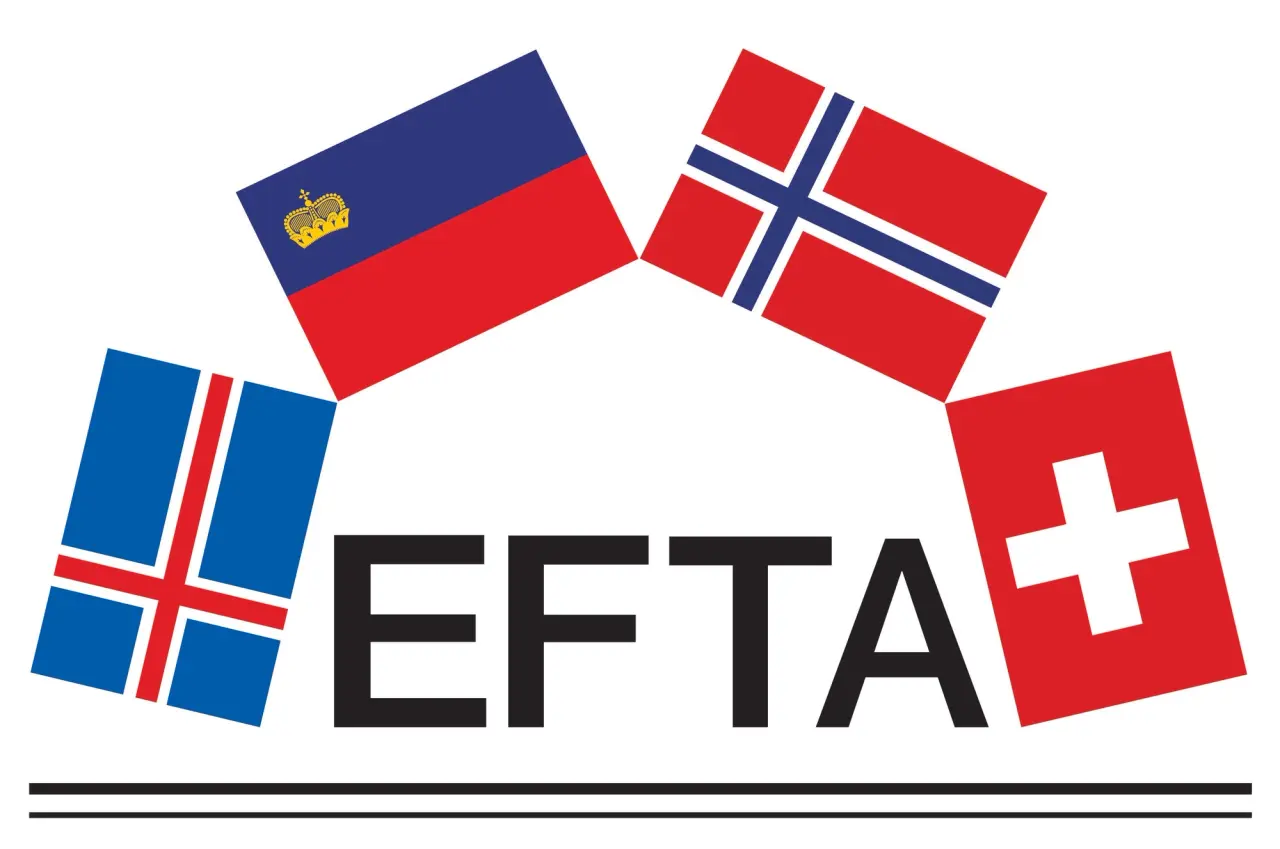
This essay aims to delineate the four roads that Switzerland, Norway, Iceland and Liechtenstein have undertaken towards the single market, and to justify that the line separating mere market access from full integration is today being renegotiated from opposite directions at once.
Author: Mateusz Miziołek
Editors: Wiktoria Koklina and Tomasz Zduńczyk
Nordic and Alpine outsiders - how do the EFTA states navigate their relations with the EU?
Switzerland, Norway, Iceland and Liechtenstein, and the renegotiated border between market access and full EU-membership.
In 2026 the edges of the European Union conjured up two events that, at first glance, appear to contradict one another. On 2 March, in Brussels, the President of the Swiss Confederation, Guy Parmelin, and the President of the European Commission, Ursula von der Leyen, signed the Bilaterals III package - the most far-reaching overhaul of Bern's relationship with the Union in over two decades. Barely six months later, on 29 August, Icelanders went to the polls and rejected the reopening of accession negotiations with the EU. One country edges towards the Union's model of integration but the other deliberately halts on its threshold. Yet both belong to the same four-member club - the European Free Trade Association (EFTA) - whose members remain outside the Union while cooperating with it, and with one another, unusually closely. This essay aims to delineate the four roads that Switzerland, Norway, Iceland and Liechtenstein have undertaken towards the single market, and to justify that the line separating mere market access from full integration is today being renegotiated from opposite directions at once.
The integration paradox - one club with two speeds
EFTA was established in 1960 under the Stockholm Convention as an intergovernmental organisation intended to promote free trade and economic integration - initially as a counterweight to the European Communities. Its history, however, has been intertwined with that of the Communities from the outset. One founding member after another - Denmark, Austria, Portugal, Sweden, the United Kingdom - eventually left in order to join the more deeply integrated bloc, until the Association shrank to today's four: Iceland, Liechtenstein, Norway and Switzerland. Following the revised convention signed in Vaduz in 2001, EFTA is now a zone confined to free trade, without any further ambitions of political integration. The true connective tissue and scaffolding of the relationship with the European Union is, instead, the European Economic Area (EEA), in force since 1994. It extends the four fundamental freedoms of the single market - the movement of goods, persons, services and capital - to the EFTA states, granting them near-complete participation in the Union's internal market. Crucially, however, only three of the four EFTA countries belong to the EEA: Norway, Iceland and Liechtenstein. Switzerland still remains outside of it. It is precisely this fault line that constitutes and strongly frames the comparison - three EEA countries against the Swiss exception. Iceland, Liechtenstein and Norway participate in the internal market through the multilateral EEA Agreement and adopt its rules. Switzerland rejected that road in a referendum in 1992 and has ever since governed its relations with Brussels through a dense web of bilateral agreements.
The end of the Swiss Sonderweg: Surrendering to the single market
On the map of European integration, Switzerland remained long a terra incognita. As the only EFTA state, it did not ratify the EEA Agreement - the direct consequence of the 1992 referendum, in which a clear majority of the cantons rejected accession. In its place, Bern built its relationship with Brussels on a free trade agreement of 1972 and on the bilateral packages of 1999 and 2004. In exchange for access to selected sectors of the single market, Switzerland embarked on to adopt particular segments of European law, thereby securing, among other things, the free movement of persons, the mutual recognition of product standards and access to public procurement. The bilateral model, however, carried a built-in weakness. The agreements had to (and have to) be continually updated, and they lacked mechanisms of supervision and dispute settlement. The attempt to escape this impasse - negotiations that had run since 2014 and survived the collapse of the framework-agreement talks in 2021 - was finally crowned by the Bilaterals III package, signed in Brussels on 2 March 2026. It is a body of roughly a dozen agreements and protocols which replaces more than a hundred interlocking, but often outdated treaties. The package harmonises standards in closely integrated areas; from foodstuffs and medical devices to energy and transport - and, most importantly from a constitutional standpoint, introduces for the first time the dynamic adoption of EU law together with mechanisms of supervision and dispute settlement. Bern thus accepts the very arrangements it had for years refused. It’s an avant-garde breakthrough. The scale of the relationship explains why both sides were so intent on an agreement. The Union is Switzerland's most important trading partner, while Switzerland - after the United States, China and the United Kingdom - is the EU's fourth. Bilateral trade in goods exceeds 360 billion euros a year, roughly seven per cent of the Union's entire goods trade, complemented by an extensive services trade and mutual direct investment counted in hundreds of billions of euros. Chemical and pharmaceutical products, machinery, optical instruments and precious metals dominate imports from the Confederation - a structure almost mirrored by the Union's exports in the opposite direction. Yet Bilaterals III is not yet a fait accompli. The package has entered its parliamentary phase, and the decisive word - in keeping with the Swiss tradition of direct democracy - will belong to the citizens in a referendum expected in 2027. Only then will it become clear whether Switzerland genuinely draws closer to the EEA model, or remains loyal to its Sonderweg.
Liechtenstein: the smallest of the four, doubly anchored, masterclass of pragmatism
For Liechtenstein it is also the EEA that forms the backbone of relations with the EU, and it enjoys broad support across the economy, politics and society. The principality participates in the internal market, in EU agencies and programmes, and is - its diminutive size notwithstanding - a donor state to the EEA Financial Mechanism, whose purpose is to reduce economic and social discrepancies among the member states of the Area. Cooperation reaches further still: in 2015, Liechtenstein signed an agreement with the EU on the automatic exchange of information in tax matters, appreciably hampering tax evasion. The peculiarity of Liechtenstein lies in its double anchoring. Since 1923, the principality has formed a customs union with Switzerland - adopted the Swiss franc as its currency and became part of the Swiss economic space. This tight-knit integration with Bern means that separate data on Liechtenstein's bilateral trade with the Union are laborious to isolate - the country is simultaneously part of the EU single market, through the EEA, and part of the Swiss economic sphere. A government report marking the twenty-fifth anniversary of EEA membership, in 2020, judged that membership to have been one of the significant drivers of the principality's economic flourishing.
Oslo's Paradox. Energy superpower and regulatory rule-taker
Norway is the country in this group that makes the fullest use of the EEA model. It draws on all four freedoms together with their accompanying policies. Norwegian firms operate on the single market on essentially the same terms as companies from the member states and are subject to the same rules of competition. Only agriculture and fisheries fall outside the agreement, though Article 19 of the EEA Agreement opens the way to a gradual liberalisation of agricultural trade. The trade picture here is unambiguous. The Union is by a wide margin Norway's most important partner: in 2024, it accounted for roughly sixty-two per cent of all Norwegian goods trade, including some two-thirds of exports. Norway exports, above all, energy carriers - crude oil and natural gas - ranking among the Union's key suppliers of energy; hence the EU's trade deficit with Oslo, running into tens of billions of euros and driven chiefly by energy imports. Norway is, at the same time, the Union's largest supplier of fish and aquaculture products, with fish imports into the EU counted in billions of euros a year. Behind this comfortable access, however, lies a political paradox. As a member of the EEA, Norway is obliged to adopt and implement the acquis communautaire - the body of existing EU law - whose shape is decided in Brussels, without a Norwegian voice at the decision-making table. The domestic debate has coined a barbed term for this: "fax democracy" (faksdemokrati), harking back to the “good ol’ days” when successive legal acts arrived from Brussels by fax.
Reykjavík’s veto: rejecting the EU in the shadow of the Arctic
Iceland also embeds its relations in the EEA and in a free trade agreement of 1972, and participates - agriculture and fisheries aside - in the single market. The Union is its foremost partner: in 2025, it accounted for more than half of Iceland's goods trade, and two-thirds of exports (chiefly non-ferrous metals and fish) went to the EU market. It was Iceland, however, that in 2026 posed the most overarching question of all. The country first applied for EU membership back in 2009, in the shadow of the financial crisis, but negotiations were suspended in 2013 and candidate status was formally withdrawn in 2015. The 2024 election brought to power a centre-left coalition under Prime Minister Kristrún Frostadóttir, which pledged to settle the matter by referendum. The vote - on whether to resume accession negotiations, rather than on membership itself - was held on 29 August 2026 and culminated in a rejection of the idea by a subtle majority. The government framed it as a "now or never" moment, arguing that full membership would serve as a shield against trade wars and Arctic rivalry. The outcome, however, ran contrary to its intentions. On an exceptionally high turnout of some 82.5 per cent, 52.84 per cent voted against reopening the talks, as against 47.16 per cent in favour. The decisive factor - as in every Icelandic debate about the Union - proved to be fisheries. The fear that the country's prized fishing waters were too important to hazard in negotiations with the Common Fisheries Policy tipped the scale. Prime Minister Frostadóttir respected the verdict, and the question of formally withdrawing the 2009 application is to be referred to parliament. For as long as the current government remains in office, until 2028, a resumption of negotiations is now unlikely. Iceland has thus confirmed the cooperation on the basis of the EEA, and outside the Union proper - a perennial status-quo.
Bibliography
- Eidgenössisches Departement für auswärtige Angelegenheiten. (n.d.-a). EFTA und EWR. https://www.eda.admin.ch/de/europaeische-freihandelsassoziation-efta-und-europaeischer-wirtschaftsraum-ewr (https://www.eda.admin.ch/de/europaeische-freihandelsassoziation-efta-und-europaeischer-wirtschaftsraum-ewr)
- Eidgenössisches Departement für auswärtige Angelegenheiten. (n.d.-b). Paket Schweiz–EU. https://www.admin.ch/de/paket-schweiz-eu (https://www.admin.ch/de/paket-schweiz-eu)
- European Commission. (n.d.-a). Iceland. https://policy.trade.ec.europa.eu/eu-trade-relationships-country-and-region/countries-and-regions/iceland_en (https://policy.trade.ec.europa.eu/eu-trade-relationships-country-and-region/countries-and-regions/iceland_en)
- European Commission. (n.d.-b). Norway. https://policy.trade.ec.europa.eu/eu-trade-relationships-country-and-region/countries-and-regions/norway_en (https://policy.trade.ec.europa.eu/eu-trade-relationships-country-and-region/countries-and-regions/norway_en)
- European Commission. (n.d.-c). Switzerland. https://policy.trade.ec.europa.eu/eu-trade-relationships-country-and-region/countries-and-regions/switzerland_en (https://policy.trade.ec.europa.eu/eu-trade-relationships-country-and-region/countries-and-regions/switzerland_en)
- European External Action Service. (n.d.-a). The European Union and Iceland. https://www.eeas.europa.eu/iceland/european-union-and-iceland_en?s=212 (https://www.eeas.europa.eu/iceland/european-union-and-iceland_en?s=212)
- European External Action Service. (n.d.-b). The European Union and Norway. https://www.eeas.europa.eu/norway_en?s=174 (https://www.eeas.europa.eu/norway_en?s=174)
- European External Action Service. (n.d.-c). The European Union and Switzerland. https://www.eeas.europa.eu/switzerland_en?s=180 (https://www.eeas.europa.eu/switzerland_en?s=180)
- European Free Trade Association. (n.d.-a). History. https://www.efta.int/about-efta/european-free-trade-association/history (https://www.efta.int/about-efta/european-free-trade-association/history)
- European Free Trade Association. (n.d.-b). Q&A about the EEA Agreement. https://www.efta.int/eea-relations-eu/qa-about-eea-agreement (https://www.efta.int/eea-relations-eu/qa-about-eea-agreement)
- Europäisches Parlament. (2025). Der Europäische Wirtschaftsraum, die Schweiz und der Norden. Kurzdarstellungen zur Europäischen Union. https://www.europarl.europa.eu/factsheets/de (https://www.europarl.europa.eu/factsheets/de)
- Frommelt, C. (2023). Die EFTA-Staaten und ihre (un-)komplizierten Beziehungen mit der Europäischen Union. Integration, 46(2), 162–179. https://www.jstor.org/stable/27315245 (https://www.jstor.org/stable/27315245)
- Leclerc, G. (2025). EU–Norway relations (Briefing PE 779.213). European Parliamentary Research Service. https://www.europarl.europa.eu/thinktank/en/document/EPRS_BRI(2025)779213
- Liechtensteinische Landesverwaltung. (n.d.). Beziehungen zur Europäischen Union. https://www.llv.li/de/landesverwaltung/diplomatische-vertretungen-fl/bruessel-b-/beziehungen-zur-europaeischen-union (https://www.llv.li/de/landesverwaltung/diplomatische-vertretungen-fl/bruessel-b-/beziehungen-zur-europaeischen-union)
Absolwent lingwistyki stosowanej (języki niemiecki i szwedzki) na Uniwersytecie Warszawskim, obecnie student magisterski języków nordyckich na Uniwersytecie w Uppsali. Jego zainteresowania sytuują się na pograniczu dyplomacji i językoznawstwa. Pracę magisterską pisze po szwedzku, poświęcając ją wielojęzyczności organizacji międzynarodowych - porównuje w niej polityki językowe Unii Europejskiej i ONZ. Zapalony tenisista, miłośnik klasycznego kina i namiętny słuchacz hip-hopu, a przede wszystkim pasjonat języków obcych.
Sprawdź podobne publikacje
Wszystkie publikacje
Combating children sexual abuse by digital services' surveillance. Is EU's legislative taking too radical steps?
People argue that upcoming CSAM regulation (Chat Control 2.0) would compromise end-to-end encryption – one of the most effective privacy tools currently available. Thus, is a game-changing threat to people's privacy truly coming or is it merely fear mongering?

Co wspólnego mają samochody elektryczne i Twoje zamówienie z Temu? O chińskim mechanizmie budowania zależności
Co łączy chińskie samochody elektryczne z zakupami na platformie Temu? Znacznie więcej, niż mogłoby się wydawać. Oba zjawiska są elementem szerszej strategii Chin, polegającej na budowaniu współzależności gospodarczej. Przyjrzymy się, w jaki sposób atrakcyjna oferta może stać się początkiem długotrwałych zależności oraz dlaczego współzależność gospodarcza stała się jednym z wyzwań dla europejskiej odporności i konkurencyjności.
Kto się boi Eurodaca? Polska przyjmuje kolejny wielkoskalowy system UE
Eurodac ma wspierać walkę z nielegalną migracją i terroryzmem, ale jednocześnie rodzi pytania o granice ingerencji państwa w prawa podstawowe i ochronę danych osobowych. Debata o Eurodac pokazuje jednak, że współczesna polityka migracyjna Unii Europejskiej coraz silniej opiera się na technologiach nadzoru i rozbudowie interoperacyjnych baz danych. Czy jest to konieczna odpowiedź na współczesne kryzysy bezpieczeństwa, czy może początek normalizacji masowej kontroli w Europie?