How the Canada-U.S. trade war turned Mark Carney into a global leader
August 22, 2026, was expected to be a turning point in relations between Canada and the United States. The increasingly tense trade conflict between the two North American countries, which had been ongoing for more than a year and a half, was supposed to reach a breakthrough with the announcement of the terms of a new agreement governing the exchange of goods between the two countries.
Author: Franciszek J. Bordon
Editor: Magdalena Pawlik
How the Canada-US trade war turned Mark Carney into a global leader
21st of August: the day the ground in the North America has shaken
August 22, 2026, was expected to be a turning point in relations between Canada and the United States. The increasingly tense trade conflict between the two North American countries, which had been ongoing for more than a year and a half, was supposed to reach a breakthrough with the announcement of the terms of a new agreement governing the exchange of goods between the two countries.
That expected breakthrough, however, did not materialize. On August 21, shortly before midnight and the official deadline for signing the agreement, the Canadian side formally announced that it was withdrawing from the negotiations after the U.S. negotiators presented new terms at the last minute.
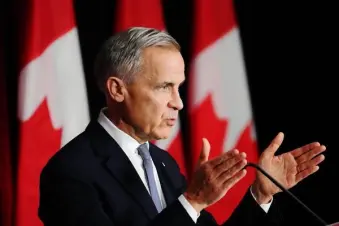
At a press conference, the prime minister Mark Carney did not directly specify what the new conditions proposed by Donald Trump’s administration were. However, statements made by the prime minister the following day suggested that the United States had sought influence over Canada’s trade agreements with third countries, substantial control over Canada’s strategically important automative sector and changes to subsidies for French-language culture as well as to the requirement for French-language labelling on products sold in Canada. The U.S. did not confirm that the new conditions had been presented in the form he outlined.
Canada’s decision to walk away from the talks was unexpected. In the preceding days, the media had reported that the negotiations were close to reaching an agreement. The move was also surprising given the long-known threat that the United States would impose additional 50% tariffs on selected Canadian goods if no agreement was reached.
The tone of Canadian prime minister’s speech, however, indicated that this was not a standard negotiating deadlock. “In recent days, the U.S. proposed new terms that were uneconomic, unfair and undermined the net benefits to Canada, calling into question the reliability of any deal,”, stressed Carney. He even framed the issue in stronger terms, declaring: “We were not prepared to compromise Canada’s sovereignty or undermine our key industries […] We were not prepared to compromise on the protection of the French language and our culture”.
Carney’s position was therefore based on considerations going far beyond economics, emphasizing questions of sovereignty and national identity as well. “By rejecting a bad deal, and standing up for Canada, and focusing on what we can control, we will build Canada strong for all.” - stated the Prime Minister.
Soon afterwards, following the passing of the deadline for signing an agreement, the United States imposed tariffs of up to 50% on Canadian products. In response, Prime Minister Carney announced that Canada would take equivalent action by imposing “dollar-for-dollar” retaliatory tariffs.
Canada and United States: a brief history of (mostly) amicable relationship
Canada-United States relations have historically been characterized by exceptional closeness. This results partly from geography: for Canada, the United States is its only land neighbor, while for the United States, Canada is one of only two countries which it shares a land border with. The two societies are also connected by cultural and linguistic ties, as well as by their historical background.
The special character of the relationship is well illustrated by two frequently cited statements. During his first official foreign visit to Canada, U.S. President John F. Kennedy observed: “Geography has made us neighbors. History has made us friends. Economics has made us partners. And necessity has made us allies.” Yet the quote by Canadian Prime Minister Pierre Trudeau in 1969 more accurately describes the unequal balance of power within the relationship: “Living next to you is in some ways like sleeping with an elephant. No matter how friendly and even-tempered is the beast, […] one is affected by every twitch and grunt”.
This does not mean that the relationship was free of serious disagreements. From the War of 1812 between the two states and border disputes in the nineteenth century, through the trade disagreements of the twentieth century - most notably the 1971 Nixon Shock, when President Richard Nixon imposed a 10% surcharge on all foreign products, including Canadian – to the most current disagreements later regarding Alaska, the Iraq War or transboundary environmental problems, tensions have always existed. However, they were normally managed through diplomacy, legal mechanisms or established bilateral institutions.
At the same time, the relationship produced some major examples of institutionalized cooperation, most notably in 1994, when Canada, the United States and Mexico concluded the North American Free Trade Agreement (NAFTA), which expanded cross-border trade and investment and strengthened bilateral cooperation between Canada and the United States.
The year 2016, and Donald Trump’s assumption of the office of President of the United States, nevertheless brought a new dynamic to the relationship – one that North America had not seen for a very long time.
Trump’s first term: the major turnaround
The first term of the 45th President of the United States was not yet marked by disputes on the scale that Ottawa and Washington have faced since 2025. Nevertheless, it still involved repeated tensions and personal friction between the Republican president and Canada’s Liberal prime minister, Justin Trudeau.
Donald Trump’s first four years in office were defined above all by the renegotiation of NAFTA. Formal negotiations began in August 2017, lasted approximately 19 months and produced an agreement in September 2018. The new agreement entered into force on 1 July 2020 under the name United States-Mexico-Canada Agreement, or UMSCA.
Disputes also emerged between the two leaders themselves. Trump and Trudeau clashed for the first time in 2017, when a U.S. executive order temporarily barred the entry of nationals from seven Muslim-majority countries and suspended the U.S. refugee program. In response, Trudeau posted on Twitter a statement: “To those fleeing persecution, terror & war, Canadians will welcome you, regardless of your faith”.
Another, more serious confrontation occurred during the G7 summit held in La Malbaie, Quebec, in June 2018, shortly after the United States had imposed tariffs of 25% on Canadian steel and 10% on Canadian aluminium. Trudeau responded that Canadians would not be “pushed around” by U.S. tariffs. After leaving the summit, Trump called Trudeau “very dishonest and weak”, accusing him of making false statements and portraying him as “meek and mild” during the meetings. In August 2020, the Trump administration reimposed a 10% tariff on certain Canadian products, and the Canadian government responded with “dollar-for-dollar” tariffs on U.S. aluminum products worth approximately C$3.6 billion.
The underlying cause of the tensions was not merely personal animosity, but the Trump administration’s protectionist approach to trade and its willingness to use tariffs as leverage against a close ally. Relations between Washington and Ottawa became more stable after Democrat Joe Biden took office. Biden and Trudeau held more similar views on multilateralism and cooperation with allies, which helped reduce the confrontational tone of the relationship.
Trump’s second term: The escalation turned even more heated
In 2024, Donald Trump defeated Kamala Harris and returned to the White House. Immediately after his electoral victory, in November 2024, he announced his intention to impose 25% tariffs on all products from Canada and Mexico.
Meanwhile, just as 2024 was a year of important elections in the United States, 2025 was expected to be an important electoral year in Canada. Justin Trudeau had become a highly unpopular figure in Canadian politics. A few months before the election, his approval rating stood at only 22%, the lowest level of support recorded during his premiership. In late December 2024, only around 16% of respondents in polls said they intended to vote for the Liberals, compared with 45% for the Conservatives led by Pierre Poilievre. A Conservative return to power after almost a decade of Liberal government appeared inevitable.
In response to increasingly poor ratings, on 6 January 2025 Trudeau announced his intention to resign as Liberal leader and to leave the office of prime minister once his party and selected a new leader. This led to Mark Carney becoming prime minister on 14 March 2025. Immediately after taking office, he faced the difficult task of preparing the Liberal Party for an early election. The Liberals were confronted with deep public dissatisfaction over high living costs and problems in the housing market. It initially appeared that these issues would dominate the election campaign. However, they soon ceased to be its central theme.
On 20 January 2025, in his inaugural address, Donald Trump announced that he intended to impose steep tariffs on U.S. trading partners. He accused Canada and Mexico of enabling illegal migration and fentanyl trafficking into the United States, while also benefiting unfairly from trade imbalances. These claims were controversial: only around 0.2% of seized fentanyl entering the United States came through Canada. Trump also repeatedly suggested that Canada should become America’s “51st state”. Trudeau immediately described these remarks as a threat to Canadian sovereignty.
Trump’s announcements quickly developed into concrete actions. On 1 February, he signed executive orders imposing 25% tariffs on most imports from Canada and 10% tariffs on Canadian energy products, which were partially implemented on 4 March. Ottawa immediately responded with 25% tariffs on U.S. goods worth C$30 billion. Several days later, the Trump administration imposed 25% tariffs on steel and aluminium, to which Canada responded with retaliatory tariffs on further C$29.8 billion worth of U.S. goods. The conflict increasingly ceased to be seen as an ordinary dispute over trade conditions.
A new actor enters the scene
Mark Carney, the newly elected Prime Minister, from the outset adopted a firm but negotiable stance. He promised to maintain Canadian retaliatory tariffs as long as the United States continued to impose tariffs on Canada, while also stressing his readiness to negotiate provided that Canada’s autonomy and the principles of fair trade were respected. On 23 March, he called an election for 28 April, arguing that he needed a strong mandate to confront Washington’s policies. During the campaign, Trump did not reduce the pressure: on 26 March, he announced 25% tariffs on imported automobiles, and Carney responded with 25% tariffs on U.S. vehicles that did not comply with USMCA rules.
Trump’s aggressive rhetoric, combined with real economic pressure and suggestions that Canada could lose its sovereignty, created a sense of threat and strong public mobilization in Canada. Relations with the United States quickly became the dominant issue of the election campaign, overshadowing earlier disputes over the cost of living, the housing crisis and the legacy of Liberal government. In this context, the incumbent prime minister, Mark Carney, had the greatest opportunity to demonstrate leadership. He could frame the election not merely as a contest between economic programs, but as a decision over who would most effectively defend Canadian interests against the pressure from Washington.
Carney portrayed Trump’s policy as an attempt to “break” Canada in order to subordinate it to the United States, but at the same time avoided calls for a complete end to cooperation with Washington. This approach enabled him to build an image of a calm and competent negotiator, capable both of responding to Trump’s pressure and of limiting the economic costs of escalation.
Carney’s flexible approach and negotiating effectiveness were well received by Canadian voters and led to something that only a few months earlier had seemed impossible: in December 2024, the Conservatives had a lead of around 20 percentage points over the Liberals, but within roughly three months the gap had been eliminated and the Liberals moved into the lead.
The federal election held on 28 April 2025 brought victory to Carney’s party. The Liberal Party won 43.8% of all valid votes and 169 seats in the 343-seat House of Commons, three seats short of majority. Pierre Poilievre’s Conservatives won 41.3% and 144 seats. Although the Liberals did not secure an absolute majority, the result represented an increase from 160 seats they had won in the 2021 election.
Much of the media attributed this turnaround to the so-called “Trump effect”, in which citizens rallied behind the government and the leader seen as most capable of defending national interests. The Conservatives, despite widespread fatigue with a decade of Liberal rule, were unable to monopolize the issue of how Canada should respond to Washington’s actions with equal success. Carney, by contrast, used his position as incumbent prime minister to combine firm rhetoric towards Trump’s threats with measures intended to reduce the direct effects of tariffs and preserve room for negotiation. This success was not solely the result of Trump’s policies, however. Trudeau’s departure, the improvement in the Liberal Party’s image after the leadership change, and above all Carney’s personal credibility on economic issues were also crucial. To fully understand Carney’s first electoral victory, it is necessary to look back at his political background in the years preceding the period discussed here.
Carney – the emergence of the charismatic leader
Before officially entering politics and before becoming Prime Minister of Canada, Mark Carney had already held some of the most important positions in central banking. He was Governor of the Bank of Canada during the 2008 global financial crisis and later Governor of the Bank of England – the first non-British person in the history of that more than 300-year-old institution to hold the position – from 2013 to 2020, a period that included the Brexit referendum and the political and economic uncertainty surrounding the United Kingdom’s withdrawal from the European Union.
As the trade conflict with Washington escalated, Carney’s stance also attracted attention abroad. His response to pressure from the far more powerful United States was seen as an example of how a middle power could defend its interests without abandoning either its economic pragmatism or its commitment to international cooperation.
Carney used the international visibility created by his disputes with Trump to encourage Western and other like-minded states to defend a rules-based international order. His statements at the World Economic Forum in Davos in January 2026 attracted particular attention.
Carney’s speech in Davos was an appeal for multilateralism and for cooperation among “middle powers” at a time when great powers were increasingly attempting to reshape the international system according to their own interests. Carney called for the defence of free trade and a world based on rules and legitimacy rather than on the unrestricted use of power. Significantly, he did not mention the United States or President Donald Trump by name. Nevertheless, he argued that a world based on multilateralism had to survive, while acknowledging that its previous leader, the United States, no longer appeared willing to bear responsibility for sustaining it.
Carney’s vision for the future – that “the power of legitimacy, integrity and rules will remain strong if we choose to wield them together” – offered much needed positive vision for states seeking to preserve the international order that had developed over recent decades. His observation that “if we’re not at the table, we’re on the menu” resonated widely because it captured the feeling of vulnerability of middle powers in a rapidly changing global trade and security environment. The address received a standing ovation from attendees at the World Economic Forum.
A rough ride but with high hopes
After the Liberal victory, Mark Carney sought to maintain a firm position in response to Trump’s pressure while at the same time opening discussions on a new economic and security arrangement. The two leaders’ meeting at the White House on 6 May was relatively calm: Carney clearly rejected suggestions that Canada should join the United States, while Trump expressed a desire to improve bilateral relations. The conflict nevertheless quickly returned. On 3 June, the United States doubled its tariffs on steel and aluminium to 50%, and in July Trump raised tariffs on Canadians goods not covered by USMCA to 35%. However, more than 85% of Canada-U.S. trade continued to be tariff-free. Relations deteriorated again during the autumn, when Trump cancelled trade talks in response to an Ontario government advertisement that used archival remarks by Ronald Reagan criticizing tariffs.
In the summer of 2026, the conflict escalated sharply once more. On 20 July, Trump announced additional 50% tariffs on selected Canadian goods. As negotiators appeared close to an agreement, the United States postponed their implementation until 22 August, but when the negotiations broke down, the tariffs entered into force shortly after.
The Canada-U.S. relations post 21st of August
Canada’s reaction to the collapse of trade negotiations with the United States was broadly united and confrontational. Most of public opinion, the federal government, provincial premiers and a significant part of the opposition supported the prime minister’s decision to reject a deal that Ottawa regarded as unacceptable. The prevailing view was that it was preferable to bear the economic cost of tariffs rather than accept terms seen as undermining Canadian sovereignty.
Crucially, Carney did not formally rule out renewed negotiations, but he argued that the agreement then on offer could not be accepted by Canada. He stated that the United States had “asked too much and offered too little”, while continuing to argue that Canada had the capacity to adapt economically. “We have everything we need to pivot and prosper”, he said.
Carney again presented himself as a persuasive and forceful political communicator. His comments on protecting Canadian values, the French language and national culture generated considerable public attention.
Most provincial premiers, including Doug Ford of Ontario, David Eby of British Columbia, Wab Kinew of Manitoba and Scott Moe of Saskatchewan, argued that Ottawa had been right to reject a bad agreement, with Premier Moe even stating that a return to the previous status quo in Canada-U.S. relations was no longer possible. The response was not completely uniform: Alberta Premier Danielle Smith favored a rapid return to negotiations because of the potential costs of a prolonged conflict for Alberta’s export-oriented contested constituencies.
The domestic reaction importantly had a cross-party dimension. Even among Conservative voters, a majority supported walking away from the talks. An Angus Reid survey found that 53% of those who had voted Conservative in 2025 approved ending the negotiations. Across the population as a whole, 76% said that Canada had done the right thing. Support for Carney rose during his term, and the strong response to his handling of the dispute contributed to the performance of the Liberal Party. In the federal by-elections held after the 2025 general election, the Liberals won six of the seven contested constituencies.
The calculation of losses (and gains?)
The trade war between Canada and the United States has imposed economic losses on both sides. Canada, however, has suffered considerably greater damage. The Bank of Canada estimates that U.S. tariffs will reduce the level of Canadian GDP by approximately 1.5% by the end of 2026 compared with a no-conflict scenario. A Scotiabank model produces a decline of around 1.1% in GDP and employment approximately 0.8% lower. The sectors most affected include metals, automative manufacturing, lumber and paper.
The United States has also experienced costs through higher prices for imported raw materials and components, disruptions to integrated supply chains and reduced exports to Canada. Yet the impact on the U.S. economy as a whole is less visible because of its larger scale and because a substantial share of bilateral trade continues to benefit from USMCA preferences.
Given these long-lasting tensions, which have nevertheless been more costly for Canada, an essential question arises: has anyone gained from the tariff conflict and can call itself a winner? Neither the United States nor Canada has gained economically, since both countries have suffered from reduced trade and higher costs. For Donald Trump, however, a tough position towards America’s northern neighbor can also serve as a success within his domestic electorate. It can be argued though, that Mark Carney has been the political figure who benefited most from the growing tensions in Canada-U.S. relations since 2025.
His political success appears to lie in his ability to understand and address Canadian public sentiment. Few countries have experienced Trump administration rhetoric as a threat to their sovereignty as directly as Canada. The sense of danger created by Trump’s statements helped produce a “rally around the flag” effect: Carney sought to unite premiers from both liberal and conservative provinces around a common defence of Canadian interests. His emphasis on the protection of the French-speaking culture was particularly significant, because it linked the trade dispute to a broader question of Canadian identity.
Carney’s successful activity, however, has not been limited to domestic Canadian audience. In January 2026, the Carney government established a new strategic partnership with the People’s Republic of China and reached a preliminary agreement aimed at reducing trade barriers. Carney also met European Commission President Ursula von der Leyen in Strasbourg, who proposed that Canada become the European Union’s first “associate member”, a proposal welcomed by Carney, although for now it remains a political initiative rather than a concluded agreement. Through his image as a firm leader resisting pressure from a much stronger neighbor, Carney gained greater international visibility and became an important voice among Western democracies.
During his term, Carney has therefore sought not only to communicate effectively, but also to broaden Canada’s circle of trade and strategic partners. This sends a signal both to Canadian voters and, indirectly, to Washington. At the same time, it remains clear that Canada is still far from becoming economically independent from the United States or even substantially reducing the role of the U.S. market in Canadian trade.
On 2 September 2026, Spark Insights published a survey showing that 70% of respondents approved the manner in which the federal government led by Mark Carney was handling its responsibilities, while Carney’s Liberals held a 49% to 29% lead over the Conservatives. The 70% figure was the highest recorded in Spark Insights’ own tracking of the approval of any Canadian prime minister in history.
Epilogue: Canada has its captain
The past several years can be seen as one of the most serious crises in the history of Canada-United States relations, with highly destructive consequences for the economies of both countries. It remains difficult to predict the direction that negotiations between Ottawa and Washington will take. For the moment, the situation appears to be at an impasse, marked by a sharp exchange of reciprocal, “dollar-for-dollar” tariff measures. Nevertheless, Prime Minister Carney has stated that he remains in frequent contact with the White House, including after the breakdown of negotiations at the end of August.
For Canada, this is undoubtedly a period of major challenges ahead. An open trade conflict with its largest trading partner – still the destination for well over two-thirds of Canadian merchandise exports – creates serious risks for domestic business and workers concerned about their income and employment. Nevertheless, public surveys indicate that a substantial majority of Canadians continue to trust the government’s course. In this sense, many Canadians appear to view Mark Carney as the right captain steering the ship called Canada through increasingly turbulent waters: firm in resisting U.S. pressure, but still willing to keep channels for dialogue open. Carney hence has benefited politically from this period, becoming one of the most strongly supported Canadian leaders of the present period.
Bibliography
1. ABC News / Associated Press, U.S.-Canada Trade War Taxes Small Businesses as Costs Rise During the Iran War, ABC News, [online], https://abcnews.com/Politics/wireStory/us-canada-trade-war-taxes-small-businesses-costs-136483377 (https://abcnews.com/Politics/wireStory/us-canada-trade-war-taxes-small-businesses-costs-136483377), [dostęp: 27.09.2026].
2. Al Jazeera, How Canadians Are Bracing for the Impact of Trump’s Trade War, Al Jazeera, 12.09.2026, [online], https://www.aljazeera.com/amp/economy/2026/9/12/how-canadians-are-bracing-for-the-impact-of-trumps-trade-war (https://www.aljazeera.com/amp/economy/2026/9/12/how-canadians-are-bracing-for-the-impact-of-trumps-trade-war), [dostęp: 27.09.2026].
3. Angus Reid Institute, Trudeau Tracker, Angus Reid Institute, [online], https://angusreid.org/trudeau-tracker/ (https://angusreid.org/trudeau-tracker/), [dostęp: 3.10.2026].
4. Associated Press, Canada–U.S. Trade War Further Ruptures a Historic Alliance, Associated Press, [online], https://apnews.com/article/canada-us-trade-war-trump-carney-tariffs-4d18583fe52134ca8550652ad9772d2c (https://apnews.com/article/canada-us-trade-war-trump-carney-tariffs-4d18583fe52134ca8550652ad9772d2c), [dostęp: 3.10.2026].
5. Associated Press, Trump’s Trade War and Annexation Threats Have Upended Canada’s Election, Associated Press, [online], https://apnews.com/article/canada-election-prime-minister-carney-trump-poilievre-9e74b1aa2749b2b5697997803fbcc66e (https://apnews.com/article/canada-election-prime-minister-carney-trump-poilievre-9e74b1aa2749b2b5697997803fbcc66e), [dostęp: 21.09..2026].
6. Bank of Canada, Canadian Outlook, „Monetary Policy Report”, październik 2025, [online], https://www.bankofcanada.ca/publications/mpr/mpr-2025-10-29/canadian-outlook/ (https://www.bankofcanada.ca/publications/mpr/mpr-2025-10-29/canadian-outlook/), [dostęp: 28.09.2026].
7. Bank of Canada, Mark Carney: Profile, Bank of Canada, [online], https://www.bankofcanada.ca/profile/mark-carney/ (https://www.bankofcanada.ca/profile/mark-carney/), [dostęp: 28.09.2026].
8. Bank of Canada, One Year Later—Assessing the Impact of U.S. Trade Restrictions, „Monetary Policy Report”, kwiecień 2026, [online], https://www.bankofcanada.ca/publications/mpr/mpr-2026-04-29/in-focus-2/ (https://www.bankofcanada.ca/publications/mpr/mpr-2026-04-29/in-focus-2/), [dostęp: 28.09.2026].
9. Bank of Canada, Tariff and Other Assumptions, „Monetary Policy Report”, styczeń 2026, [online], https://www.bankofcanada.ca/publications/mpr/mpr-2026-01-28/section-8/ (https://www.bankofcanada.ca/publications/mpr/mpr-2026-01-28/section-8/), [dostęp: 28.09.2026].
10. Bank of Canada, Tariff Assumptions, „Monetary Policy Report”, lipiec 2026, [online], https://www.bankofcanada.ca/publications/mpr/mpr-2026-07-15/tariff-assumptions/ (https://www.bankofcanada.ca/publications/mpr/mpr-2026-07-15/tariff-assumptions/), [dostęp: 28.09.2026].
11. Bank of England, Mark Carney: Biography, Bank of England, [online], https://www.bankofengland.co.uk/about/people/past/mark-carney/biography (https://www.bankofengland.co.uk/about/people/past/mark-carney/biography), [dostęp: 10.09.2026].
12. BBC News, Canada Election Called amid Trump’s Trade War and ‘51st State’ Rhetoric, BBC News, [online], https://www.bbc.com/news/articles/crlxe4wxxj4o (https://www.bbc.com/news/articles/crlxe4wxxj4o), [dostęp: 08.09.2026].
13. BBC News, Canada Election Results in Charts, BBC News, [online], https://www.bbc.com/news/articles/cn4jd39g8y1o (https://www.bbc.com/news/articles/cn4jd39g8y1o), [dostęp: 15.09.2026].
14. BBC News, Carney Faces a Crucial Test after Calling Trump’s Bluff, BBC News, [online], https://www.bbc.com/news/articles/c3040pn8lmmo (https://www.bbc.com/news/articles/c3040pn8lmmo), [dostęp: 06.09.2026].
15. BBC News, Carney Says Canada–U.S. Relationship Has Changed Due to Trump’s Tariffs, BBC News, [online], https://www.bbc.com/news/articles/c5y41z4351qo (https://www.bbc.com/news/articles/c5y41z4351qo), [dostęp: 08.09.2026].
16. BBC News, EU Chief Backs Plan for Canada to Become an Associate Member, BBC News, [online], https://www.bbc.com/news/articles/cjwyzrr9d3dko (https://www.bbc.com/news/articles/cjwyzrr9d3dko), [dostęp: 28.09.2026].
17. BBC News, Mark Carney Sworn In as Canadian Prime Minister, BBC News, [online], https://www.bbc.com/news/articles/cgm1lg3gj7vo (https://www.bbc.com/news/articles/cgm1lg3gj7vo), [dostęp: 10.09.2026].
18. BBC News, Trump Pauses New 50% Tariffs on Canada for Three Days, BBC News, [online], https://www.bbc.com/news/articles/cy9wz79ze29o (https://www.bbc.com/news/articles/cy9wz79ze29o), [dostęp: 15.09.2026].
19. Bloomberg News, Canada Election Results 2025, Bloomberg News, 2025, [online], https://www.bloomberg.com/graphics/2025-canada-election-results/ (https://www.bloomberg.com/graphics/2025-canada-election-results/), [dostęp: 15.09.2026].
20. CBC News, A Look Back at Canada–U.S. Relations during the First Trump Administration, CBC News, [online], https://www.cbc.ca/news/politics/canada-united-states-trump-1.7375698 (https://www.cbc.ca/news/politics/canada-united-states-trump-1.7375698), [dostęp: 06.09.2026].
21. CBC News, Canada’s Provincial Premiers Respond to the Collapse of U.S. Trade Talks, CBC News, [online], https://www.cbc.ca/news/world/livestory/us-canada-trade-war-new-tariffs-9.7310605 (https://www.cbc.ca/news/world/livestory/us-canada-trade-war-new-tariffs-9.7310605), [dostęp: 28.09.2026].
22. CBC News, Carney Says He’s Still Regularly Speaking with Trump Despite the Trade Rift, CBC News, [online], https://www.cbc.ca/news/politics/carney-trump-regularly-speaking-9.7339325 (https://www.cbc.ca/news/politics/carney-trump-regularly-speaking-9.7339325), [dostęp: 27.09.2026].
23. CBC News, Carney Says the United States “Asked Too Much and Offered Too Little”, CBC News, [online], https://www.cbc.ca/lite/story/9.7310605 (https://www.cbc.ca/lite/story/9.7310605), [dostęp: 07.09.2026].
24. CBC News, Carney Warns Canadians of Difficult Times Ahead as Retaliatory Tariffs Take Effect, CBC News, [online], https://www.cbc.ca/news/politics/carney-national-address-tariffs-9.7335475 (https://www.cbc.ca/news/politics/carney-national-address-tariffs-9.7335475), [dostęp: 08.09.2026].
25. CBC News, Full Text of Carney’s Davos Speech on Middle Powers and the Rules-Based International Order, CBC News, [online], https://www.cbc.ca/news/politics/mark-carney-speech-davos-rules-based-order-9.7053350 (https://www.cbc.ca/news/politics/mark-carney-speech-davos-rules-based-order-9.7053350), [dostęp: 26.09.2026].
26. CBC News, Full Text of Carney’s Remarks after Suspending Trade Talks with the United States, CBC News, [online], https://www.cbc.ca/news/politics/carney-full-remarks-us-trade-talks-suspended-9.7317033 (https://www.cbc.ca/news/politics/carney-full-remarks-us-trade-talks-suspended-9.7317033), [dostęp: 06.09.2026].
27. CBC News, G7 Leaders’ Final Communiqué and the 2018 Trump–Trudeau Dispute, CBC News, [online], https://www.cbc.ca/news/politics/g7-leaders-final-communique-1.4699658 (https://www.cbc.ca/news/politics/g7-leaders-final-communique-1.4699658), [dostęp: 10.09.2026].
28. CBC Radio, The Sunday Edition, Sleeping with a Very Cranky Elephant: The History of Canada–U.S. Tensions, CBC Radio, 17.06.2018, [online], https://www.cbc.ca/radio/sunday/the-sunday-edition-june-17-2018-1.4692469/sleeping-with-a-very-cranky-elephant-the-history-of-canada-u-s-tensions-1.4699017 (https://www.cbc.ca/radio/sunday/the-sunday-edition-june-17-2018-1.4692469/sleeping-with-a-very-cranky-elephant-the-history-of-canada-u-s-tensions-1.4699017), [dostęp: 08.09.2026].
29. CityNews Montreal, Carney’s Liberals Take All Three By-Elections, Including Chicoutimi–Le Fjord, CityNews Montreal, 1.09.2026, [online], https://montreal.citynews.ca/2026/09/01/liberals-take-all-three-byelections/ (https://montreal.citynews.ca/2026/09/01/liberals-take-all-three-byelections/), [dostęp: 28.09.2026].
30. Congressional Research Service, U.S. Tariffs on Canadian Imports: Section 338 of the Tariff Act, Congressional Research Service, [online], https://www.congress.gov/crs_external_products/R/PDF/R49349/R49349.1.pdf (https://www.congress.gov/crs_external_products/R/PDF/R49349/R49349.1.pdf), [dostęp: 27.09.2026].
31. Council on Foreign Relations, The U.S.–Canada Trade War Could Mark a Breaking Point, Council on Foreign Relations, [online], https://www.cfr.org/articles/the-u-s-canada-trade-war-could-mark-a-breaking-point (https://www.cfr.org/articles/the-u-s-canada-trade-war-could-mark-a-breaking-point), [dostęp: 21.09.2026].
32. Cult MTL, Mark Carney Approval Rating Holds Steady at 66% / Reaches 70%, Cult MTL, wrzesień 2026, [online], https://cultmtl.com/2026/09/mark-carney-approval-rating-approve/ (https://cultmtl.com/2026/09/mark-carney-approval-rating-approve/), [dostęp: 26.09.2026].
33. Cult MTL, Mark Carney Officially Has the Highest Approval Rating in Canadian History, Cult MTL, wrzesień 2026, [online], https://cultmtl.com/2026/09/mark-carney-officially-has-the-highest-approval-rating-in-canadian-history/ (https://cultmtl.com/2026/09/mark-carney-officially-has-the-highest-approval-rating-in-canadian-history/), [dostęp: 26.09.2026].
34. Elections Canada, Official Voting Results: Forty-Fifth General Election, Elections Canada, [online], https://www.elections.ca/res/rep/off/ovrGE45/home.html (https://www.elections.ca/res/rep/off/ovrGE45/home.html), [dostęp: 15.09.2026].
35. European Commission Audiovisual Service, Meeting between Mark Carney and Ursula von der Leyen, European Commission, [online], https://audiovisual.ec.europa.eu/en/media/photo/P-070478 (https://audiovisual.ec.europa.eu/en/media/photo/P-070478), [dostęp: 28.09.2026].
36. European Commission Audiovisual Service, State of the European Union Debate, Strasbourg, 16 September 2026, European Commission, 16.09.2026, [online], https://audiovisual.ec.europa.eu/en/media/video/I-294257 (https://audiovisual.ec.europa.eu/en/media/video/I-294257), [dostęp: 28.09.2026].
37. European Union Institute for Security Studies, The EU’s First Associate Member? How to Make EU–Canada Ties Stronger and Tighter, European Union Institute for Security Studies, [online], https://www.iss.europa.eu/publications/commentary/eus-first-associate-member-how-make-eu-canada-ties-stronger-and-tighter (https://www.iss.europa.eu/publications/commentary/eus-first-associate-member-how-make-eu-canada-ties-stronger-and-tighter), [dostęp: 27.09.2026].
38. Export Development Canada, One Year Later: How U.S. Tariffs Reshaped Canada–U.S. Trade, Export Development Canada, [online], https://www.edc.ca/en/article/us-tariffs-canada-trade-impact.html (https://www.edc.ca/en/article/us-tariffs-canada-trade-impact.html), [dostęp: 28.09.2026].
39. Federal Reserve History, Nixon Ends Convertibility of U.S. Dollars to Gold and Announces the 1971 Policy Package, Federal Reserve Bank of St. Louis, [online], https://www.federalreservehistory.org/essays/gold-convertibility-ends (https://www.federalreservehistory.org/essays/gold-convertibility-ends), [dostęp: 08.09.2026].
40. Global Affairs Canada, Quarterly Economic and Trade Report: Winter 2026, Government of Canada, zima 2026, [online], https://international.canada.ca/en/global-affairs/corporate/reports/chief-economist/quarterly/winter-2026 (https://international.canada.ca/en/global-affairs/corporate/reports/chief-economist/quarterly/winter-2026), [dostęp: 28.09.2026].
41. Global News, 76% of Canadians Say Ending Trade Talks Was the Right Decision, Global News, [online], https://globalnews.ca/news/12032548/canada-us-trade-war-poll/ (https://globalnews.ca/news/12032548/canada-us-trade-war-poll/), [dostęp: 3.10.2026].
42. Global News, Liberals Sweep Federal By-Elections, Global News, [online], https://globalnews.ca/news/12042780/vote-count-toronto-chicoutimi-vancouver-byelections-results/ (https://globalnews.ca/news/12042780/vote-count-toronto-chicoutimi-vancouver-byelections-results/), [dostęp: 3.10.2026].
43. Global News, Transcript of Mark Carney’s World Economic Forum Speech, January 2026, Global News, styczeń 2026, [online], https://globalnews.ca/news/11620877/carney-davos-wef-speech-transcript/ (https://globalnews.ca/news/11620877/carney-davos-wef-speech-transcript/), [dostęp: 3.10.2026].
44. Government of Canada, Department of Finance, Canada Announces a Tariff Package in Response to Unjustified U.S. Tariffs, Government of Canada, 4.03.2025, [online], https://www.canada.ca/en/department-finance/news/2025/03/canada-announces-robust-tariff-package-in-response-to-unjustified-us-tariffs.html (https://www.canada.ca/en/department-finance/news/2025/03/canada-announces-robust-tariff-package-in-response-to-unjustified-us-tariffs.html), [dostęp: 10.09.2026].
45. Government of Canada, Department of Finance, Canada Announces Entry into Force of Countermeasures against U.S. Auto Imports, Government of Canada, 8.04.2025, [online], https://www.canada.ca/en/department-finance/news/2025/04/canada-announces-entry-into-force-of-countermeasures-against-auto-imports-from-the-united-states.html (https://www.canada.ca/en/department-finance/news/2025/04/canada-announces-entry-into-force-of-countermeasures-against-auto-imports-from-the-united-states.html), [dostęp: 10.09.2026].
46. Government of Canada, Department of Finance, Canada Responds to Unjustified U.S. Tariffs on Canadian Steel and Aluminum Products, Government of Canada, 12.03.2025, [online], https://www.canada.ca/en/department-finance/news/2025/03/canada-responds-to-unjustified-us-tariffs-on-canadian-steel-and-aluminum-products.html (https://www.canada.ca/en/department-finance/news/2025/03/canada-responds-to-unjustified-us-tariffs-on-canadian-steel-and-aluminum-products.html), [dostęp: 10.09.2026].
47. Government of Canada, Department of Finance, List of Products from the United States Subject to 25 Per Cent Tariffs Effective March 4, 2025, Government of Canada, 4.03.2025, [online], https://www.canada.ca/en/department-finance/news/2025/03/list-of-products-from-the-united-states-subject-to-25-per-cent-tariffs-effective-march-4-2025.html (https://www.canada.ca/en/department-finance/news/2025/03/list-of-products-from-the-united-states-subject-to-25-per-cent-tariffs-effective-march-4-2025.html), [dostęp: 10.09.2026].
48. Government of Canada, Environment and Climate Change Canada, Canada–United States Air Quality Agreement: Overview, Government of Canada, [online], https://www.canada.ca/en/environment-climate-change/services/air-pollution/issues/transboundary/canada-united-states-air-quality-agreement-overview.html (https://www.canada.ca/en/environment-climate-change/services/air-pollution/issues/transboundary/canada-united-states-air-quality-agreement-overview.html), [dostęp: 08.09.2026].
49. House of Commons Library, Canada: 2025 Federal Election, House of Commons Library, [online], https://commonslibrary.parliament.uk/research-briefings/cbp-10244/ (https://commonslibrary.parliament.uk/research-briefings/cbp-10244/), [dostęp: 15.09.2026].
50. Institute of Central Europe, The Powerless in Davos: Central European Motifs in Mark Carney’s Speech, Institute of Central Europe, [online], https://ies.lublin.pl/en/comments/the-powerless-in-davos-central-european-motifs-in-mark-carneys-speech/ (https://ies.lublin.pl/en/comments/the-powerless-in-davos-central-european-motifs-in-mark-carneys-speech/), [dostęp: 26.09.2026].
51. NPR, Denmark Holds Elections amid Trump’s Greenland Threats, NPR, 24.03.2026, [online], https://www.npr.org/2026/03/24/nx-s1-5757935/denmark-elections-trump-greenland (https://www.npr.org/2026/03/24/nx-s1-5757935/denmark-elections-trump-greenland), [dostęp: 27.09.2026].
52. Office of the Historian, U.S. Department of State, International Monetary Policy, 1969–1972, Document 221, U.S. Department of State, [online], https://history.state.gov/historicaldocuments/frus1969-76v03/d221 (https://history.state.gov/historicaldocuments/frus1969-76v03/d221), [dostęp: 10.09.2026].
53. Office of the Prime Minister of Canada, Canada’s Countermeasures in Response to U.S. Auto Tariffs, Office of the Prime Minister of Canada, 3.04.2025, [online], https://www.pm.gc.ca/en/news/news-releases/2025/04/03/canada-announces-new-countermeasures-response-tariffs-from-united-states (https://www.pm.gc.ca/en/news/news-releases/2025/04/03/canada-announces-new-countermeasures-response-tariffs-from-united-states), [dostęp: 10.09.2026].
54. Office of the Prime Minister of Canada, Canada–China Strategic Partnership, Office of the Prime Minister of Canada, 16.01.2026, [online], https://www.pm.gc.ca/en/news/news-releases/2026/01/16/prime-minister-carney-forges-new-strategic-partnership-peoples (https://www.pm.gc.ca/en/news/news-releases/2026/01/16/prime-minister-carney-forges-new-strategic-partnership-peoples), [dostęp: 28.09.2026].
55. Office of the Prime Minister of Canada, Carney’s Meeting with Ursula von der Leyen in Strasbourg, Office of the Prime Minister of Canada, 16.09.2026, [online], https://www.pm.gc.ca/en/news/readouts/2026/09/16/prime-minister-carney-meets-president-european-commission-ursula-von-der (https://www.pm.gc.ca/en/news/readouts/2026/09/16/prime-minister-carney-meets-president-european-commission-ursula-von-der), [dostęp: 28.09.2026].
56. Office of the Prime Minister of Canada, Carney’s Remarks on Canada–U.S. Trade Negotiations, Office of the Prime Minister of Canada, 22.08.2026, [online], https://www.pm.gc.ca/en/news/speeches/2026/08/22/prime-minister-carney-delivers-remarks-canada-us-trade-negotiations (https://www.pm.gc.ca/en/news/speeches/2026/08/22/prime-minister-carney-delivers-remarks-canada-us-trade-negotiations), [dostęp: 07.09.2026].
57. Office of the Prime Minister of Canada, Carney’s Statement on the Breakdown of Canada–U.S. Trade Negotiations, Office of the Prime Minister of Canada, 21.08.2026, [online], https://www.pm.gc.ca/en/news/statements/2026/08/21/statement-prime-minister-carney-canada-us-trade-negotiations (https://www.pm.gc.ca/en/news/statements/2026/08/21/statement-prime-minister-carney-canada-us-trade-negotiations), [dostęp: 07.09.2026].
58. Office of the Prime Minister of Canada, Carney’s Visit to France and the European Union, Office of the Prime Minister of Canada, 17.09.2026, [online], https://www.pm.gc.ca/en/news/news-releases/2026/09/17/prime-minister-carney-deepens-ties-trusted-allies-visit-france-and (https://www.pm.gc.ca/en/news/news-releases/2026/09/17/prime-minister-carney-deepens-ties-trusted-allies-visit-france-and), [dostęp: 27.09.2026].
59. Reuters, Canada Announces Retaliatory Tariffs after Trade Talks Fail, Reuters, 22.08.2026, [online], https://www.reuters.com/business/carney-says-new-canadian-tariffs-us-goods-will-come-into-effect-september-8-2026-08-22/ (https://www.reuters.com/business/carney-says-new-canadian-tariffs-us-goods-will-come-into-effect-september-8-2026-08-22/), [dostęp: 07.09.2026].
60. Reuters, Canadian Election Dominated by Concerns about Trump, Reuters, 28.04.2025, [online], https://www.reuters.com/world/americas/canadians-vote-election-dominated-by-concerns-about-trump-2025-04-28/ (https://www.reuters.com/world/americas/canadians-vote-election-dominated-by-concerns-about-trump-2025-04-28/), [dostęp: 10.09.2026].
61. Reuters, Carney Ahead in Polls during the Final Week of the Canadian Campaign, Reuters, 21.04.2025, [online], https://www.reuters.com/world/americas/carney-ahead-polls-canada-enters-last-week-election-campaign-2025-04-21/ (https://www.reuters.com/world/americas/carney-ahead-polls-canada-enters-last-week-election-campaign-2025-04-21/), [dostęp: 10.09.2026].
62. Reuters, Carney Calls an Early Election Seeking a Mandate to Confront Trump, Reuters, 23.03.2025, [online], https://www.reuters.com/world/americas/canadas-carney-poised-call-election-seeks-mandate-tackle-trump-2025-03-23/ (https://www.reuters.com/world/americas/canadas-carney-poised-call-election-seeks-mandate-tackle-trump-2025-03-23/), [dostęp: 10.09.2026].
63. Reuters, Carney Faces Domestic Pressure after Calling Trump’s Bluff, Reuters, 26.08.2026, [online], https://www.reuters.com/business/carney-faces-ticking-clock-canadian-support-tough-tactics-with-trump-2026-08-26/ (https://www.reuters.com/business/carney-faces-ticking-clock-canadian-support-tough-tactics-with-trump-2026-08-26/), [dostęp: 15.09.2026].
64. Reuters, Carney Says the United States Must Be Serious before Talks Can Resume, Reuters, 1.09.2026, [online], https://www.reuters.com/world/canadas-carney-says-us-needs-start-being-serious-before-trade-talks-can-resume-2026-09-01/ (https://www.reuters.com/world/canadas-carney-says-us-needs-start-being-serious-before-trade-talks-can-resume-2026-09-01/), [dostęp: 15.09.2026].
65. Reuters, Carney’s Rhetoric and Economic Credibility Boost Liberals, Reuters, 16.04.2025, [online], https://www.reuters.com/world/americas/carneys-tough-talk-bland-competence-boost-liberals-ahead-canadian-election-2025-04-16/ (https://www.reuters.com/world/americas/carneys-tough-talk-bland-competence-boost-liberals-ahead-canadian-election-2025-04-16/), [dostęp: 26.09.2026].
66. Reuters, Liberals Benefit from Anti-Trump Backlash after Election Victory, Reuters, 29.04.2025, [online], https://www.reuters.com/world/americas/canadas-liberals-benefit-trump-backlash-claim-poll-victory-2025-04-29/ (https://www.reuters.com/world/americas/canadas-liberals-benefit-trump-backlash-claim-poll-victory-2025-04-29/), [dostęp: 15.09.2026].
67. Reuters, Trump Raises Tariffs on Canada to 35%, Reuters, 31.07.2025, [online], https://www.reuters.com/world/americas/trump-increases-tariff-canada-35-25-cites-fentanyl-2025-07-31/ (https://www.reuters.com/world/americas/trump-increases-tariff-canada-35-25-cites-fentanyl-2025-07-31/), [dostęp: 26.09.2026].
68. Scotiabank Economics, Estimating Provincial Impacts of U.S. Tariffs, Scotiabank Economics, wrzesień 2025, [online], https://www.scotiabank.com/ca/en/about/economics/economics-publications/post.other-publications.insights-views.us-tariffs-provincial-impacts--september-15--2025-.html (https://www.scotiabank.com/ca/en/about/economics/economics-publications/post.other-publications.insights-views.us-tariffs-provincial-impacts--september-15--2025-.html), [dostęp: 28.09.2026].
69. Spark Insights, Liberals Lead 49%–29%; Approval of the Carney Government Climbs to New High, Spark Insights, 2.09.2026, [online], https://sparkadvocacy.ca/insights/2026/09/liberals-lead-49-29-approval-of-carney-government-climbs-to-new-high (https://sparkadvocacy.ca/insights/2026/09/liberals-lead-49-29-approval-of-carney-government-climbs-to-new-high), [dostęp: 28.09.2026].
70. Statistics Canada, Canada and United States Bilateral Trade in Goods, Statistics Canada, [online], https://www150.statcan.gc.ca/t1/tbl1/en/tv.action?pid=1210000501 (https://www150.statcan.gc.ca/t1/tbl1/en/tv.action?pid=1210000501), [dostęp: 28.09.2026].
71. Statistics Canada, International Trade Statistics, Statistics Canada, [online], https://www.statcan.gc.ca/en/subjects-start/international_trade (https://www.statcan.gc.ca/en/subjects-start/international_trade), [dostęp: 28.09.2026].
72. The Conversation, Mark Carney: A Master of Statecraft in an Era Short of Great Orators, The Conversation, [online], https://theconversation.com/mark-carney-a-master-of-statecraft-in-an-era-short-of-great-orators-292391 (https://theconversation.com/mark-carney-a-master-of-statecraft-in-an-era-short-of-great-orators-292391), [dostęp: 26.09.2026].
73. The Conversation, One Venue, Two Speeches: How Mark Carney Left Donald Trump in the Dust in Davos, The Conversation, [online], https://theconversation.com/one-venue-two-speeches-how-mark-carney-left-donald-trump-in-the-dust-in-davos-274062 (https://theconversation.com/one-venue-two-speeches-how-mark-carney-left-donald-trump-in-the-dust-in-davos-274062), [dostęp: 26.09.2026].
74. The Guardian, European Union Invites Canada to Become Its First Associate Member, „The Guardian”, 16.09.2026, [online], https://www.theguardian.com/world/2026/sep/16/von-der-leyen-mark-carney-canada-eu-first-associate-member (https://www.theguardian.com/world/2026/sep/16/von-der-leyen-mark-carney-canada-eu-first-associate-member), [dostęp: 27.09.2026].
75. The New York Times, Carney’s Account of the Evolving Relationship with Trump, „The New York Times”, 23.09.2026, [online], https://www.nytimes.com/2026/09/23/world/canada/mark-carney-canada-us-trump-tariffs.html (https://www.nytimes.com/2026/09/23/world/canada/mark-carney-canada-us-trump-tariffs.html), [dostęp: 28.09.2026].
76. The New York Times, U.S.–Canada Trade Talks Collapse, „The New York Times”, 21.08.2026, [online], https://www.nytimes.com/2026/08/21/world/canada/trump-tariffs-trade-no-deal-carney-canada.html (https://www.nytimes.com/2026/08/21/world/canada/trump-tariffs-trade-no-deal-carney-canada.html), [dostęp: 07.09.2026].
77. U.S. Census Bureau, Trade in Goods with Canada, U.S. Census Bureau, [online], https://www.census.gov/foreign-trade/balance/c1220.html (https://www.census.gov/foreign-trade/balance/c1220.html), [dostęp: 28.09.2026].
78. U.S. Environmental Protection Agency, U.S.–Canada Air Quality Agreement, U.S. Environmental Protection Agency, [online], https://www.epa.gov/international-cooperation/us-canada-air-quality-agreement (https://www.epa.gov/international-cooperation/us-canada-air-quality-agreement), [dostęp: 10.09.2026].
79. Visual Capitalist, Canada’s Biggest Export Partners, Visual Capitalist, [online], https://www.visualcapitalist.com/canadas-export-partners/ (https://www.visualcapitalist.com/canadas-export-partners/), [dostęp: 28.092026].
80. White House, Fact Sheet: President Donald J. Trump Imposes Additional Tariffs on Canada, The White House, 20.07.2026, [online], https://www.whitehouse.gov/fact-sheets/2026/07/fact-sheet-president-donald-j-trump-imposes-additional-tariffs-on-canada/ (https://www.whitehouse.gov/fact-sheets/2026/07/fact-sheet-president-donald-j-trump-imposes-additional-tariffs-on-canada/), [dostęp: 08.09.2026].
81. World Economic Forum, Davos 2026: Special Address by Mark Carney, Prime Minister of Canada, World Economic Forum, 2026, [online], https://www.weforum.org/stories/forum-institutional/davos-2026-special-address-by-mark-carney-prime-minister-of-canada/ (https://www.weforum.org/stories/forum-institutional/davos-2026-special-address-by-mark-carney-prime-minister-of-canada/), [dostęp: 26.09.2026].
82. World Trade Organization, Trade and Foreign Policy Have Always Been Intertwined, World Trade Organization, 9.02.2018, [online], https://www.wto.org/english/news_e/news18_e/ddgra_09feb18_e.htm (https://www.wto.org/english/news_e/news18_e/ddgra_09feb18_e.htm), [dostęp: 28.09.2026].
- 0121st of August: the day the ground in the...
- 02Canada and United States: a brief history...
- 03Trump’s first term: the major...
- 04Trump’s second term: The escalation...
- 05A new actor enters the scene
- 06Carney – the emergence of the charismatic...
- 07A rough ride but with high hopes
- 08The Canada-U.S. relations post 21st of...
- 09The calculation of losses (and gains?)
- 10Epilogue: Canada has its captain
- 11Bibliography
Franciszek Bordon jest studentem studiów magisterskich na kierunku politologia na Wydziale Nauk Politycznych i Studiów Międzynarodowych Uniwersytetu Warszawskiego oraz absolwentem studiów licencjackich na kierunku stosunki międzynarodowe. Jego zainteresowania naukowe koncentrują się na państwach świata zachodniego, ze szczególnym uwzględnieniem krajów niemieckojęzycznych. W swoich pracach zajmuje się przede wszystkim migracją i jej wpływem na tkankę społeczną państw, a przyszłe badania naukowe zamierza poświęcić polityce migracyjnej i integracyjnej krajów Europy Zachodniej. Chętnie pisze teksty analizujące szersze zjawiska polityczne i ich nieoczekiwane konsekwencje. W wolnych chwilach uwielbia uczyć się języków obcych, czytać klasyków oraz oglądać dzieła Polskiej Szkoły Filmowej.
Sprawdź podobne publikacje
Wszystkie publikacje
Midterms 2026: wybory, które mogą zmienić politykę zagraniczną USA
3 listopada 2026 roku Amerykanie ponownie udadzą się do urn, jednak tym razem stawką nie będzie Biały Dom, lecz układ sił w Kongresie. Wynik wyborów śródterminowych może określić, jak dużą swobodą w drugiej połowie kadencji będzie dysponował Donald Trump i jak silny opór wobec jego administracji będą mogli stawiać Demokraci. Znaczenie tych wyborów wykracza jednak daleko poza politykę wewnętrzną USA.
Słabnąca pozycja dolara na arenie międzynarodowej
Od dekad dolar amerykański stanowił fundament globalnej gospodarki i potęgi USA. Dziś ten filar amerykańskiej hegemonii zaczyna pękać. Arabia Saudyjska zwraca się ku chińskiemu juanowi, a rosnąca w siłę grupa BRICS rozważa stworzenie własnej, opartej na złocie waluty. Dedolaryzacja staje się potężną bronią geopolityczną w rękach Pekinu i Moskwy. Czy to początek końca amerykańskiej dominacji na świecie? Przeczytaj, jak zmiana walutowych reguł gry kształtuje nowy porządek międzynarodowy.
Cuba’s Future Amid Sanctions and Growing Tensions. Is the United States going to invade Cuba?
Cuba is an island country located only 140 kilometers from the United States. History has shown that Cuba is important for U.S. security interests, regional stability and economic considerations. The island has long represented a geopolitical challenge for the United States, particularly after Fidel Castro established a communist regime. Relations between Cuba and the United States have once again begun to deteriorate, raising questions about whether Cuba could face a new scenario.