The EU’s Interests in Arctic Security at Europe’s Northern Edge
This article examines how the Union pursues security in a region where it holds territory but no seat, and argues that in the High North the EU’s influence stems not from membership but from partnership - and that partnership, however close, confers influence rather than control.
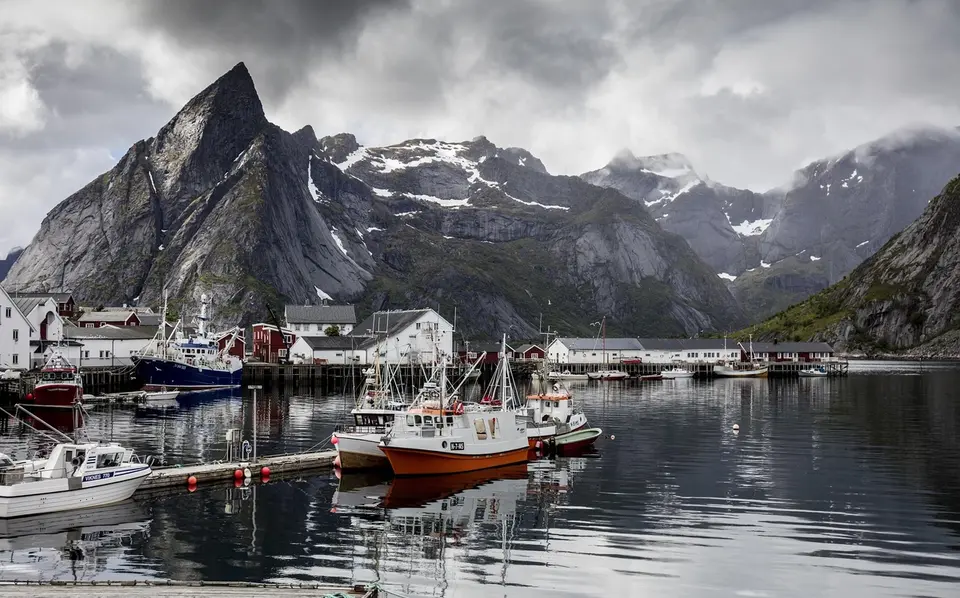
The EU’s Interests in Arctic Security at Europe’s Northern Edge
Norway, Iceland, and the limits of partnership where the EU has interests and territory but no formal role in Arctic decision-making.
Autor: Mateusz Miziołek
Editor: Wiktoria Koklina
Northern Europe’s security map has been redrawn with remarkable speed. Finland joined NATO in 2023 and Sweden in 2024, so that all five Nordic states now belong to the same alliance. For the European Union this is reassuring - yet it lays bare a problem the Union has not resolved. Two states whose role in Arctic and North Atlantic security is pivotal - Norway and Iceland - are members of NATO but not of the EU, while Denmark, Sweden and Finland belong to both. This article examines how the Union pursues security in a region where it holds territory but no seat, and argues that in the High North the EU’s influence stems not from membership but from partnership - and that partnership, however close, confers influence rather than control.
A word of orientation helps here. The Arctic has no single government; it is governed loosely by the states around it, chiefly through the Arctic Council - a forum for cooperation among the eight Arctic states, with six Indigenous Peoples’ organisations sitting as Permanent Participants, which by design does not deal with military security, and to which the EU does not belong. Membership of NATO and membership of the EU are separate things, and in the High North they do not line up: an ally in one organisation may be an outsider in the other. That mismatch underpins everything that follows.
Close to Europe, outside the Union
Norway and Iceland are by no means peripheral to Europe. Both belong to the European Economic Area and to Schengen, both are founding members of NATO, and both align regularly with EU foreign-policy positions. They are deeply embedded in most of Europe’s practical architecture while remaining outside its decision-making. That is the problem - close enough to be essential, but distant enough that the Union cannot count on them as it counts on members.
The Union’s own standing in the region is weaker than its interests would warrant. The EU has no Arctic Ocean coastline of its own, although Finland and Sweden extend north of the Arctic Circle; Denmark is an EU member state and exercises sovereignty over Greenland, though Greenland is not part of the Union. Nor is the Union itself a member of the Arctic Council: at Kiruna in 2013 the Council agreed to receive its application for observer status affirmatively but deferred a final decision, and the EU has since taken part in the Council’s work in practice without holding the formal status of a recognised observer. It is present in the Arctic largely through its members and its money, and only rarely as an actor in its own right.
From climate file to security file
For years the Union treated the Arctic principally as a question of climate and the environment, while its security dimension was, in hindsight, a grey rhino: an obvious danger left unattended. That changed as the strategic stakes grew, and above all in the wake of Russia’s full-scale invasion of Ukraine, which turned the High North into a zone of military competition. The war also broke the region’s main instrument of cooperation. In March 2022 the seven Western members of the Arctic Council paused their participation in all Council meetings while Russia held the chair; from June 2022 they resumed projects without Russian participation, and in February 2024 all eight states, Russia included, reached a consensus to resume Working Group meetings in a virtual format. Cooperation at working level has thus partly resumed, while meetings at political level remain suspended - so the one forum that once brought all eight Arctic states around a table stays frozen at the level that matters most, which consequently pushes the EU to work bilaterally, state by state. The instrument it chose is the bilateral security partnership.
In May 2024 the EU and Norway signed a Security and Defence Partnership, with the Union calling Norway its most closely associated partner. Besides support to Ukraine, Norwegian participation in CSDP missions and cooperation on defence initiatives, it covers maritime security, cyber security, the resilience of critical infrastructure and the protection of underwater infrastructure - the areas that matter most for the North Atlantic. A year later, in May 2025, the EU signed a joint statement with the three EEA–EFTA states, Iceland, Liechtenstein and Norway, on strengthening foreign and security policy cooperation. The EU–Iceland Security and Defence Partnership followed in March 2026, covering support to Ukraine, Arctic matters and maritime security, cyber issues, emerging and disruptive technologies, economic security, and the climate–security nexus; and on 26 March 2026 the Union agreed to let Norway and Iceland take part in its governmental satellite programmes, GOVSATCOM and IRIS², which matter for secure communication where ground infrastructure is thin.
The logic is to bolster the Union’s position by binding Norway and Iceland into its security framework as closely as non-membership allows, because the alternative - an accession neither is pursuing - does not exist. Iceland confirmed as much on 29 August 2026, when an advisory referendum on whether to resume accession negotiations returned 52.8 per cent against and 47.2 per cent in favour, and the government, which had promised to respect the non-binding result, said it would set the EU question aside for the rest of its term, which runs to 2028. The question was procedural, not a verdict on membership as such, but its practical effect was to keep Iceland where it is.
Why Norway and Iceland are the substance
These two states are where the Union’s practical stake is concentrated. Norway has been the EU’s largest supplier of natural gas since 2022, and protecting the North Sea and Norwegian Sea infrastructure on which European supply depends has become a strategic concern. Iceland sits astride the Greenland-Iceland-United Kingdom gap, through which North Atlantic traffic moves, and its partnership with the Union now addresses situational awareness and maritime security in those waters. The threats are shared: mounting pressure on seabed infrastructure, growing external interest in the region and shared threats are cheaper to meet together.
Fisheries remain the standing complication, and a reminder that cooperation in the north does not go hand in hand with harmony on everything. Concern for its fishing grounds weighed heavily in Iceland’s referendum, and the EEA does not extend the Union’s common fisheries policy to Norway or Iceland, which keep their own management of their waters under separate arrangements for trade in fish and fish products. Both partners cooperate on defence while jealously guarding the resources of their waters, and the Union has to manage that tension rather than resolve it.
A treaty, a sovereignty, and a Russian town
Nowhere is that tangle of law, sovereignty and security tighter than on Svalbard, and the archipelago deserves more attention than it usually receives. Under the Svalbard Treaty of 1920, Norway holds sovereignty over the islands, but under constraints found nowhere else: the nationals of every party enjoy equal rights to fishing, hunting, mining and commercial activity on the islands and in their territorial waters, and, under Article 9, Norway may neither establish nor allow naval bases or fortifications there, and the islands may never be used for warlike purposes. This provision Norway reads as a specific ban, and Russia as full demilitarisation. The result is a piece of sovereign Norwegian territory that Norway administers on unusual terms, down to a cap on taxation: it may levy only what the archipelago itself needs. Russia has long been entrenched at the mining settlement of Barentsburg, a permanent presence on NATO’s northern flank sustained under the treaty’s equal-access rule.
One of the most consequential disputes over Svalbard, however, is between Norway and the EU itself, and it has turned on an unlikely creature: the snow crab. Since 2017 the EU has set its own snow-crab fishing opportunities in the Svalbard Fisheries Protection Zone - the 200-nautical-mile zone Norway established in 1977 - under which member states issued licences to their vessels; a Latvian-flagged operator fished on that basis and was prosecuted by Norway. The Norwegian Supreme Court addressed the matter twice. In a judgment of 14 February 2019 it held that the snow crab is a sedentary species that may not be harvested without Norwegian authorisation, while leaving the Svalbard Treaty’s geographical reach open. In a plenary judgment of 20 March 2023 it went further, ruling that the treaty’s equal-treatment provisions do not extend to the continental shelf beyond Svalbard’s territorial waters, so that Norway alone may license the harvest there.
Those rulings settle the matter in Norwegian law; they do not, and cannot, conclusively resolve the underlying question in international law, where the geographical scope of the 1920 treaty remains contested - by the EU, and not only by it. Svalbard shows the Union’s position in the High North in miniature: it holds exclusive competence for the conservation of marine biological resources under the common fisheries policy, it presses rights under a treaty to which it is not even a party, and it still depends on how a non-member state, and that state’s courts, choose to read the law.
Greenland and the pressure from an ally
Greenland belongs to a different institutional category, and it is worth saying why it still bears on the argument. The territory left the European Communities in 1985 and is tied to the Union through Denmark and its status as an overseas country and territory; it is not a case of EU–non-member relations in the way Norway and Iceland are. But the pressure on Greenland reset the strategic context across the whole High North. On 9 January 2026 President Trump said the United States would “do something on Greenland whether they like it or not”, arguing that otherwise Russia or China would take it. On 21 January, at Davos, he ruled out using force while still demanding ownership of the island, and after meeting NATO Secretary-General Mark Rutte announced a “framework” for a future deal on Greenland and the Arctic, together with the lifting of an additional 10 per cent tariff he had threatened on European countries.
The EU answered with the instruments it has. On 7 September 2026 the Commission President announced a €200 million Global Gateway Partnership Package for Greenland, to be invested in 2026 and 2027, alongside a renewed Joint Declaration between the EU, Greenland and Denmark, building on the EU office opened in Nuuk in 2024. During the same visit she announced that the Commission would present a new Arctic strategy - an admission, in effect, that the Union regards its current instruments as insufficient. Greenland mattered here not as a test of EU-non-member relations, but as the development that made the northern partnerships suddenly urgent.
The question was then settled, for the moment, without the Union. On 22 September 2026 the United States, the Kingdom of Denmark and Greenland signed a trilateral security agreement updating the 1951 “Defense of Greenland” agreement: it allows the United States to modernise its Pituffik Space Base and to develop a new defence area at Narsarsuaq and Mestersvig; it bars non-NATO states from establishing a military presence on the island except by agreement of all three parties, and requires that same agreement for investment from outside NATO, its partners, and the EU in particularly sensitive sectors (a screening regime Greenland has yet to establish, and from which EU, NATO and partner-state investors are exempt). The agreement has no end date and may be amended only by mutual consent, though it still awaits the completion of Danish and Greenlandic parliamentary procedures before it enters into force. It reaffirms Danish sovereignty and Greenlanders’ right to self-determination, and transfers no sovereignty: the United States secured expanded, open-ended access rather than the ownership its president had demanded. Should Greenland ever become independent, it is to remain in NATO and assume Denmark’s obligations under the agreement.
What makes the case instructive is that the pressure came from an ally rather than a rival, and was resolved by bargaining among allies. An ally cannot be deterred in the way a rival can; this was coercion through trade and alliance politics and not the kind of pressure that deterrence was built to meet. It was defused not by the Union but by Copenhagen and Nuuk, which traded expanded American access for an explicit restatement of Danish sovereignty and Greenlandic self-determination. The EU was accommodated - its investors carved out of the new restrictions - yet it was not a party to the agreement that settled the security of territory belonging to one of its own member states. Few episodes illustrate the Union’s predicament in the High North more sharply: present, even accommodated, but not at the table.
EU’s elusive Arctic presence
The Arctic thus exposes the limits of partnership as a substitute for membership. Along its northern edge that substitution works because it has built real security cooperation with Norway and Iceland without enlargement. But the limit shows through at every turn. In the Arctic Council the Union holds no seat; on Svalbard it is not even a party to the treaty that governs the archipelago, and has seen its reading rejected in the Norwegian courts even as the treaty’s international scope stays contested. On Greenland, the security of territory under a member state’s sovereignty was settled in an agreement the Union did not sign. Only in the conservation of marine resources, an area of exclusive Union competence, does it assert legal rights in its own name - and even there the outcome has rested with a non-member state and its courts. The EU can coordinate with Oslo and Reykjavík, support Copenhagen, and fund, convene and align; what it cannot do is direct partners who remain sovereign, or decide in forums it does not sit in. In the region where it is most exposed, the Union is deeply present through its members, its partnerships and its money, and yet being present is not the same as being able to act.
Bibliography
1. EEAS, Security and Defence: EU and Norway sign new partnership, 28 May 2024. https://www.eeas.europa.eu/eeas/security-and-defence-eu-and-norway-sign-new-partn ership_en
2. EEAS, EU–Iceland: Joint Press Release on the signature of the Security and Defence Partnership, March 2026. https://www.eeas.europa.eu/eeas/eu-iceland-joint-press-release-signature-security-and -defence-partnership_en
3. EEAS, Joint Statement: Strengthening EEA Foreign and Security Policy Cooperation (EU, Iceland, Liechtenstein, Norway), 21 May 2025. https://www.eeas.europa.eu/eeas/european-economic-area-press-release-strengthening -eea-foreign-and-security-policy-cooperation_en
4. EEAS, EU boosts space cooperation with Norway and Iceland with Secure Connectivity Agreement (Norway and Iceland join GOVSATCOM and IRIS²), 26 March 2026. https://www.eeas.europa.eu/delegations/iceland/eu-boosts-space-cooperation-norway
and-iceland-secure-connectivity-agreement_en
5. European Commission, EU and Greenland strengthen partnership and engagement, backed by €200 million in EU investment, 7 September 2026.
6. European Commission and High Representative, Joint Communication: A stronger EU engagement for a peaceful, sustainable and prosperous Arctic, JOIN(2021) 27 final, 13 October 2021. Consolidated Version of the Treaty on the Functioning of the European Union, Article 3(1)(d) (exclusive competence for the conservation of marine biological resources under the common fisheries policy).
7. Arctic Council, Kiruna Ministerial Declaration, 15 May 2013.
8. Arctic Council, joint statement of the seven member states on the pause in Council activities (3 March 2022) and announcement on the resumption of Working Group meetings (February 2024).
9. Treaty concerning the Archipelago of Spitsbergen (Svalbard Treaty), signed Paris, 9 February 1920, in force 14 August 1925.
10. Supreme Court of Norway, judgment of 14 February 2019 (snow crab as a sedentary species; Norwegian authorisation required).
11. Supreme Court of Norway (plenary), SIA North Star Ltd v. the State (Ministry of Trade, Industry and Fisheries), HR-2023-491-P, 20 March 2023. https://www.domstol.no/en/supremecourt/rulings/2023/supreme-court-civil-cases/HR 2023-491-P/
12. Reuters, “Trump says US needs to own Greenland to deter Russia, China”, 9 January 2026.
13. Al Jazeera, “Trump says he wants ‘ownership’ of Greenland, but ‘won’t use force’”, 21 January 2026. https://www.aljazeera.com/video/newsfeed/2026/1/21/trump-says-he-wants-ownershi p-of-greenland-but-wont-use
14. Agreement between the Government of the United States of America and the Government of the Kingdom of Denmark, together with the Government of Greenland, to amend and supplement the Agreement of 27 April 1951 on the Defense of Greenland, 22 September 2026. Full text (Danish MFA): https://um.dk/usa/en/nyheder/joint-agreement-on-defense-and-security-in-the-arctic/
15. John Curtis, The new US–Denmark–Greenland agreement, House of Commons Library Research Briefing CBP-12214, 29 September 2026. https://commonslibrary.parliament.uk/research-briefings/cbp-12214/
16. Government of Iceland / RÚV, result of the advisory referendum on resuming EU accession negotiations (52.84% against, 47.16% in favour), 29 August 2026. https://www.stjornarradid.is/frettir/grein/icelandic-voters-reject-accession-negotiation s-with-the-european-union
Absolwent lingwistyki stosowanej (języki niemiecki i szwedzki) na Uniwersytecie Warszawskim, obecnie student magisterski języków nordyckich na Uniwersytecie w Uppsali. Jego zainteresowania sytuują się na pograniczu dyplomacji i językoznawstwa. Pracę magisterską pisze po szwedzku, poświęcając ją wielojęzyczności organizacji międzynarodowych - porównuje w niej polityki językowe Unii Europejskiej i ONZ. Zapalony tenisista, miłośnik klasycznego kina i namiętny słuchacz hip-hopu, a przede wszystkim pasjonat języków obcych.
Sprawdź podobne publikacje
Wszystkie publikacje
Atrakcyjny autorytaryzm? Wpływ rządów Nayiba Bukelego na wizerunek Salwadoru w państwach regionu
Czy skuteczna walka z przestępczością może uczynić autorytaryzm atrakcyjnym? Salwador pod rządami Nayiba Bukelego stał się symbolem radykalnych działań przeciwko gangom, a jego model rządzenia inspiruje polityków w całej Ameryce Łacińskiej. Rosnąca popularność tego modelu pokazuje, jak skuteczna walka z przestępczością może budować międzynarodowy prestiż państwa, a zarazem sprzyjać akceptacji autorytarnych metod sprawowania władzy.
Mirrored in multilateralism - how does the European Union speak without a vote in the United Nations?
How an european union of states that casts no ballot became a significant presence in the UN system, and why its member states’ coherence now matters more than before.
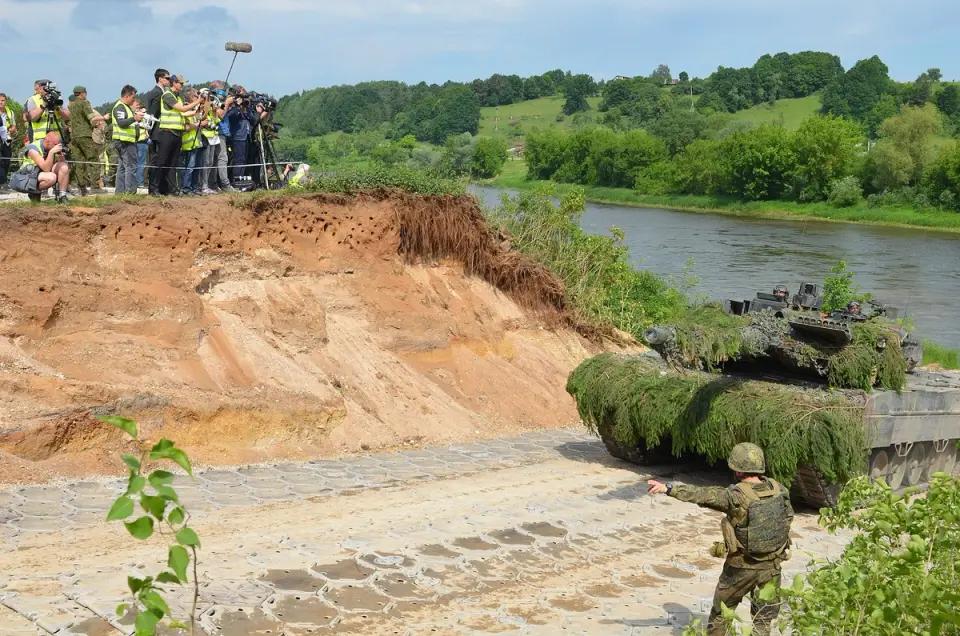
104 kilometry pytań. Jakie ryzyka dla Polski stwarza przesmyk suwalski?
Jeden z najbardziej wrażliwych punktów wschodniej flanki NATO znajduje się na granicy polsko-litewskiej. Od wybuchu pełnoskalowej wojny rosyjsko-ukraińskiej w lutym 2022 roku społeczne zainteresowanie tematyką bezpieczeństwa stale wzrasta, co stwarza potrzebę stawiania poważnych pytań o przyszłość systemu bezpieczeństwa w regionie Europy Środkowo-Wschodniej. Spróbujmy odpowiedzieć na jedno z tych podstawowych – jakie znaczenie ma przesmyk suwalski dla Rzeczypospolitej?